

My Weird Week Building an "Awful" Joke Book Empire
A marketing deep-dive into a $3k/month Amazon anomaly, the $47 toolkit that systems its magic, and why the simplest ideas are often the hardest to execute well.

Let’s start with a confession: I’ve always been fascinated by absurd, low-effort, high-reward internet businesses. The ones that make you squint and ask, “Wait, that makes money?”
So when I stumbled across the legend of an anonymously published “Bad Joke Book” on Amazon - a book with giant fonts, typos, and painfully simple humor pulling in an estimated $3,347 a month - I had to know more. This wasn’t just a fluke; it was a masterclass in understanding a niche audience’s desire for uncomplicated, shareable joy.
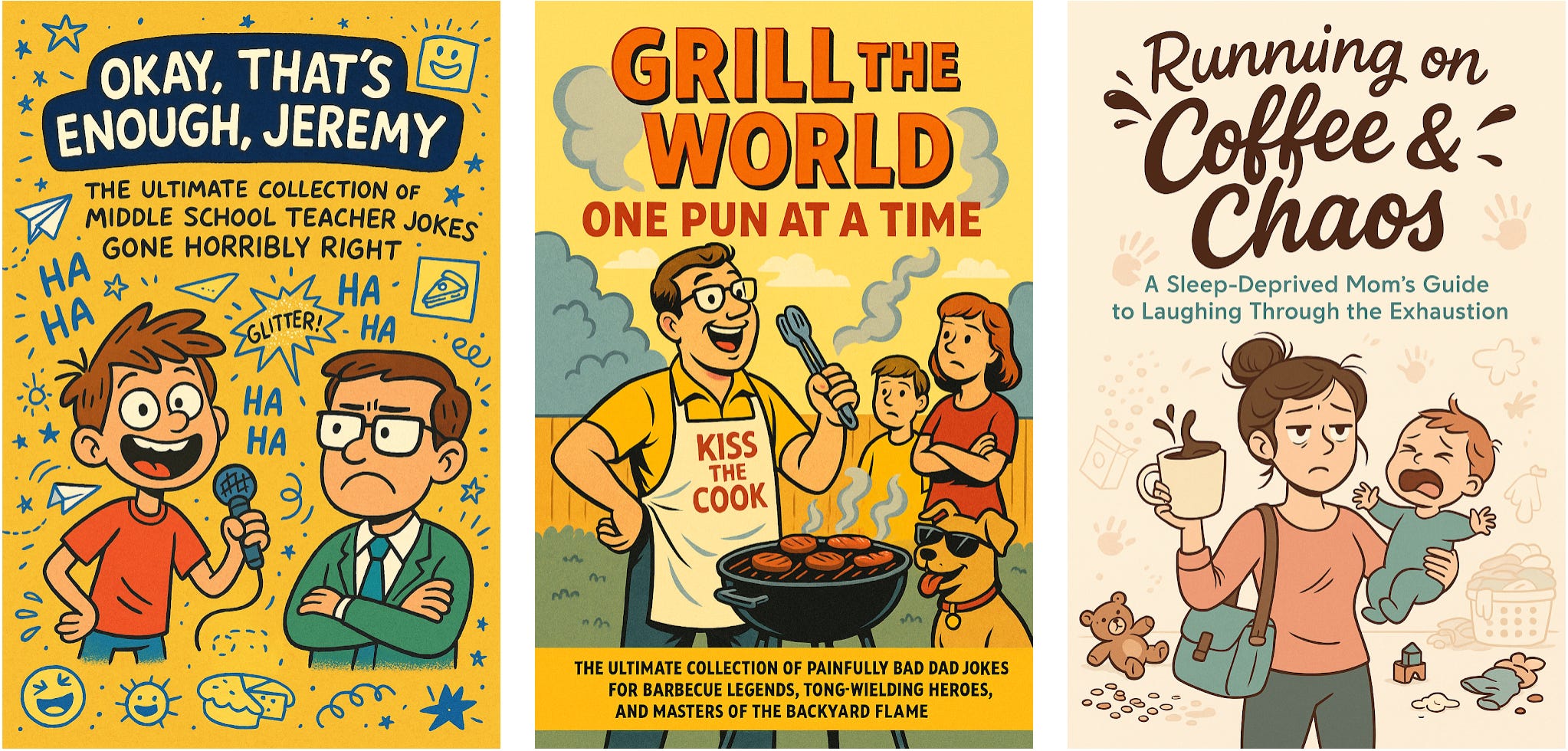
My mission became to deconstruct it. Not just to understand that book, but to find the system that could recreate its success across dozens of topics. That search led me to 330 Prompts for Bad Joke Books, a digital product promising the “engine” behind such viral simplicity.
I bought it. I tested it relentlessly for a week. And what I discovered was less about jokes and more about a fascinating framework for leveraged creativity.
The Anatomy of a Virally Simple Product
First, let’s break down the original phenomenon’s genius:
Low Barrier to Entry: The jokes weren’t “good.” They were reliably, groan-inducingly “bad.” This eliminated the pressure of being a brilliant comedian.
High Shareability & Giftability: It’s a physical product perfect for birthdays, Father’s Day, stocking stuffers. It’s an experience, not just a read.
Evergreen Niche: “Dad humor,” “cat jokes,” “office laughs” - these topics never die. They’re perpetually searched for and purchased as gifts.
Built-in Audience: Every niche (gamers, teachers, coffee lovers) is a pre-built community hungry for in-jokes.
The original book proved the market. The real question was: Could you systemize the creation process to build a catalog, not just a one-hit wonder?
My Week with the “Joke Book Engine”
The product is a PDF containing 330 “Super Prompts,” sorted into 47 categories like Bad Dad Jokes, Gamer Humor, Teacher Jokes, Vegan Jokes, and Office Humor.
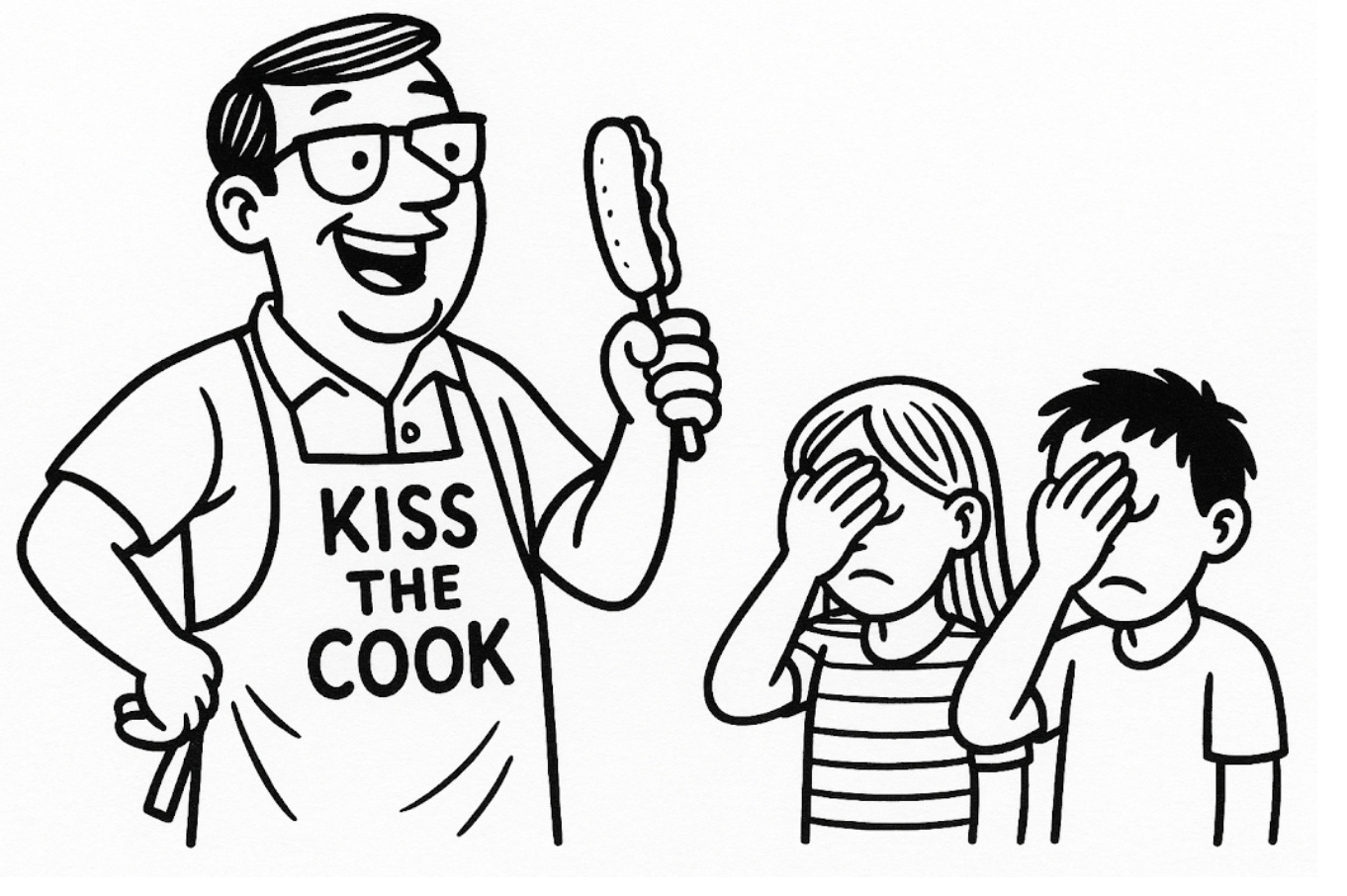
Day 1-2: The First Build
I picked “Bad Dad Jokes: Grill & BBQ Edition.” I copied the master prompt into ChatGPT-4. In under 60 seconds, it generated:
A complete book title and subtitle.
A ready-to-paste Amazon/Etsy book description, full of the right cringey dad-humor voice.
7 SEO keywords.
A detailed prompt to generate a thematic book cover using AI image tools.
20 individual chapter prompts. Each was a command to generate a chapter intro, 20-30 jokes, and an illustration idea.
The efficiency was startling. The hardest parts of publishing - concept, packaging, marketing copy - were done in a minute.
Day 3-4: Assembly Line Mode
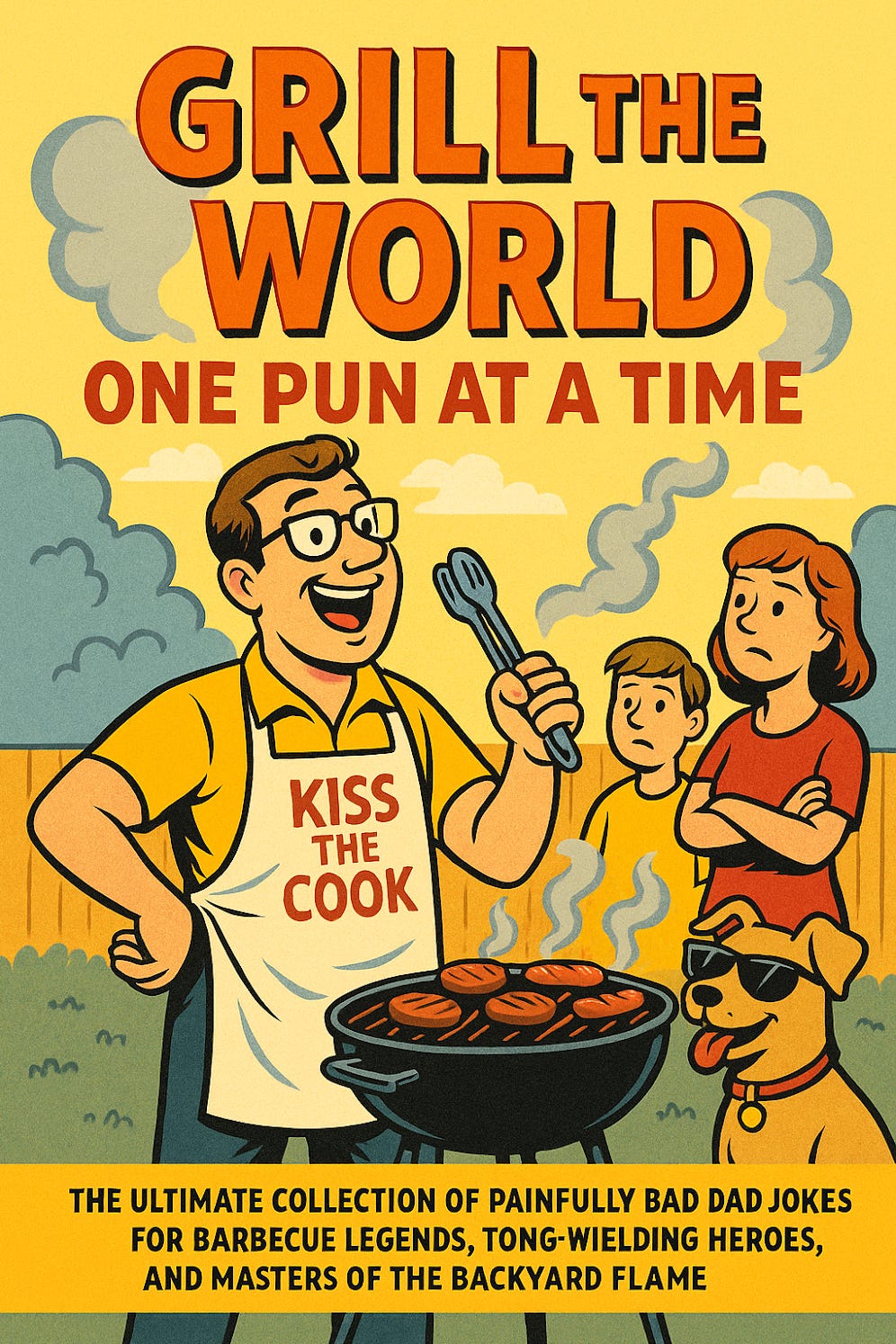
I followed the instructions. Using the AI image prompt, I had a fun, cartoonish cover in minutes. Then, I pasted each of the 20 chapter prompts. Like clockwork, each delivered a batch of themed jokes. In about 3 hours of fragmented work, I had a 100+ page manuscript ready for formatting in Canva. The system didn’t require creativity; it required follow-through.
Day 5-7: Strategic Analysis
I built more: a “Cat Lover Jokes” book and a “Gen Z Humor” book. Each took less time than the first. I realized the product’s core value: It turns creative uncertainty into a predictable, scalable production line.
The Honest Breakdown: Win vs. Work
The Major Advantages (The “Win”):
It Eradicates the Blank Page: This is its superpower. For anyone paralyzed by starting, it gives you a perfect, proven starting point. 330 times over.
You’re Buying a Business Template, Not Just Jokes: It provides the full product package—title, description, SEO, visuals. This is knowledge that takes months to learn for a new publisher.
Leverages the Perfect “Low-Expectation” Niche: The “bad” in “bad joke book” is a strategic feature, not a bug. It aligns perfectly with audience expectations, making success more attainable.
Enables Rapid Portfolio Building: The key to success in platforms like Amazon KDP and Etsy is often a catalog. This system lets you build one quickly across multiple sub-niches, testing what resonates.
The Required Realities (The “Work”):
You Are the Project Manager: This is not passive. You must compile, format, proofread, design (even with AI help), upload, price, and publish. It’s leveraged work, but it’s work.
AI Subscription is Mandatory: To get these results, you need a capable LLM like ChatGPT-4. This is an operational cost.
Saturation is Mitigated by Strategy: Yes, others have this tool. The winners will be those who use it strategically—building a branded catalog, mastering their chosen platforms’ algorithms, and perhaps combining books into bundles or series.
Human Curation is Still Needed: You must review the AI’s output. Sometimes jokes are repeated or the tone wavers. A final editorial pass is essential for quality.
Who This Is For (A Clear Checklist)
This system is PERFECT for you if:
You’re curious about Amazon KDP or Etsy but overwhelmed by where to start.
You understand the value of a digital asset portfolio.
You’re a content creator looking for a stream of themed, shareable material.
You’re a marketer or entrepreneur who geeks out over efficient systems.
You want a hands-on project that teaches modern digital publishing.
You should SKIP IT if:
You expect to “get rich quick” with zero ongoing effort.
You are morally opposed to using AI in a creative workflow.
You dislike the hands-on tasks of formatting, uploading, and managing listings.
Final Verdict: A Lesson in Modern Micro-Entrepreneurship
“330 Prompts for Bad Joke Books” is more than a product. For me, it was a practical case study in 2025’s creative landscape. It demonstrates that opportunity often lies in systematizing simplicity.
It won’t hand you a business on a platter, but it will hand you the most efficient shovel available to dig for one in a proven goldmine. For the price of a business book, you get a functional, actionable blueprint.
The original joke book author found a quirky niche. This product gives you the map to 47 of them.
If you’re ready to move from fascination to action, you can find the system I used here.
My experiment continues. I’ve published my grill book as a test (let’s see if it sells!). The process alone has provided more insight into low-content publishing than any course I’ve taken.
P.S. If you’ve ever scoffed at a simple product and then wondered how it’s thriving, I urge you to look closer. The mechanics are often where the real magic is. Start deconstructing your own “bad joke book” idea today!